Case Studies @ HJ
NCS Language Platform
A dialect library, classroom games and a support desk for the Native Communications Society of the NWT, taken from pitch to three live productio…
Client Native Communications Society of the NWT, via MonkeySphere AI
Role Lead Platform Architect & Developer; architecture, backend, releases, security and QA across every site, plus review of every contributed change.
Timeline Summer 2026 to November 2026
Stack React, Node.js, PostgreSQL, Hosted entirely in Canada, Passwordless magic-link sign-in, WCAG 2.2
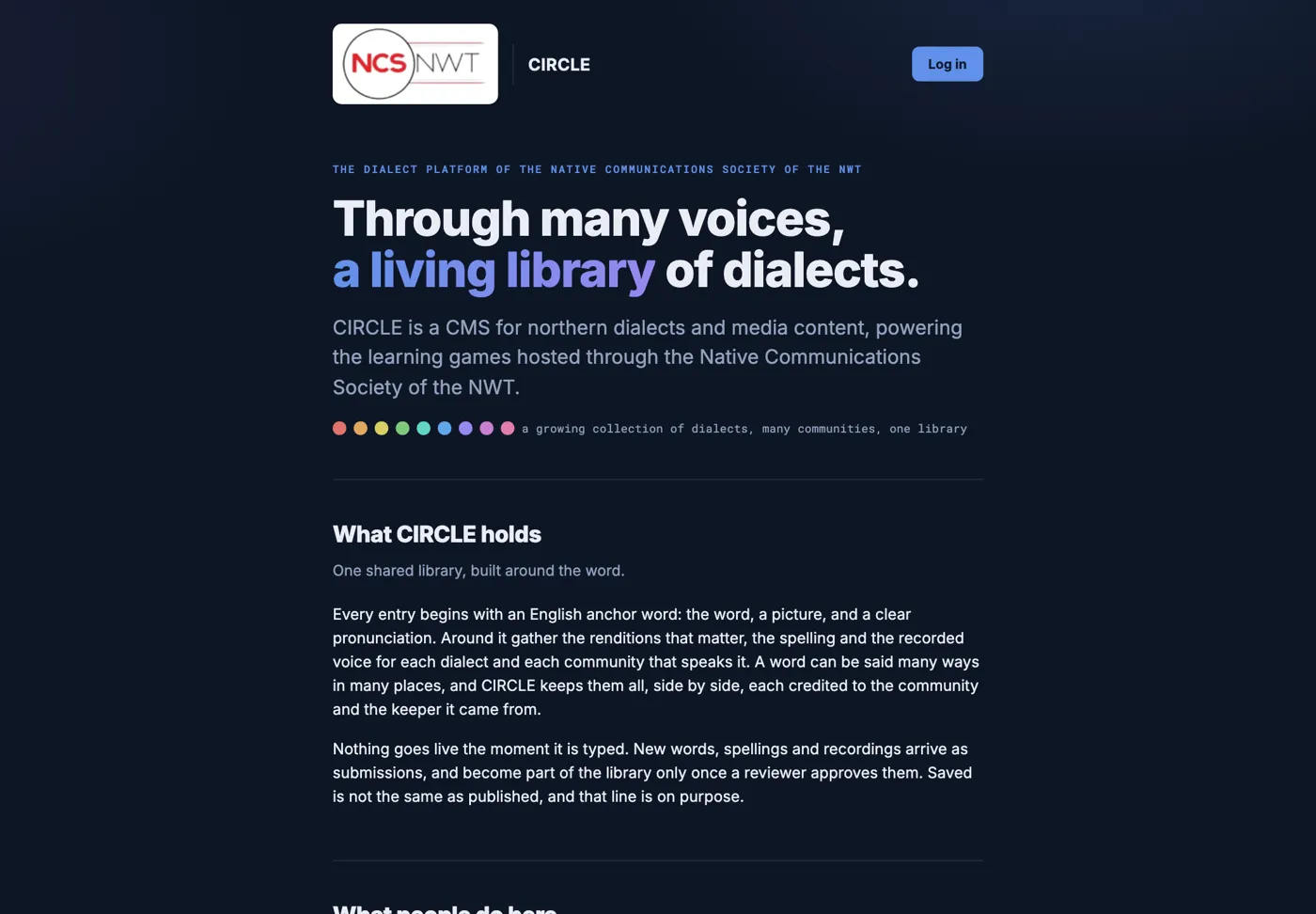
The Native Communications Society of the NWT had a language game that couldn't grow, no single home for its words and recordings, and no record of who had agreed to what. Over one season I architected and built the platform underneath: CIRCLE, a consent-gated dialect library; SPARK, classroom language games with no child accounts; and a support desk for teachers and collectors. All three run in Canada, release staging-first behind automated gates, and were handed over to NCS with runbooks and current-state docs.
The problem: a half-built prototype and a world that had moved on
The language mandate was clear. What sat underneath it was not built to carry it, and the tools to fix that had changed.
- The starting point was a half-finished prototype: a game with three thin mechanics, mostly tap-to-hear exercises, features scaffolded but never filled, and no way to make it accessible or run a classroom.
- Everything had to be custom coded to land. A new word, recording or game meant developer work, so the people who hold the language waited on a programmer instead of adding it themselves.
- The learners are children. Schools cannot hand out their personal data, kids cannot manage passwords, and their time in the game has to be safe, simple and limited to class.
- Technology had shifted. A tablet in a community can now record, trim and send a voice from the field, and a browser can type every dialect's characters without special hardware.
- How software gets built had shifted too. With modern tooling and automated testing, a small team can build, test and run a production platform that once needed a department.
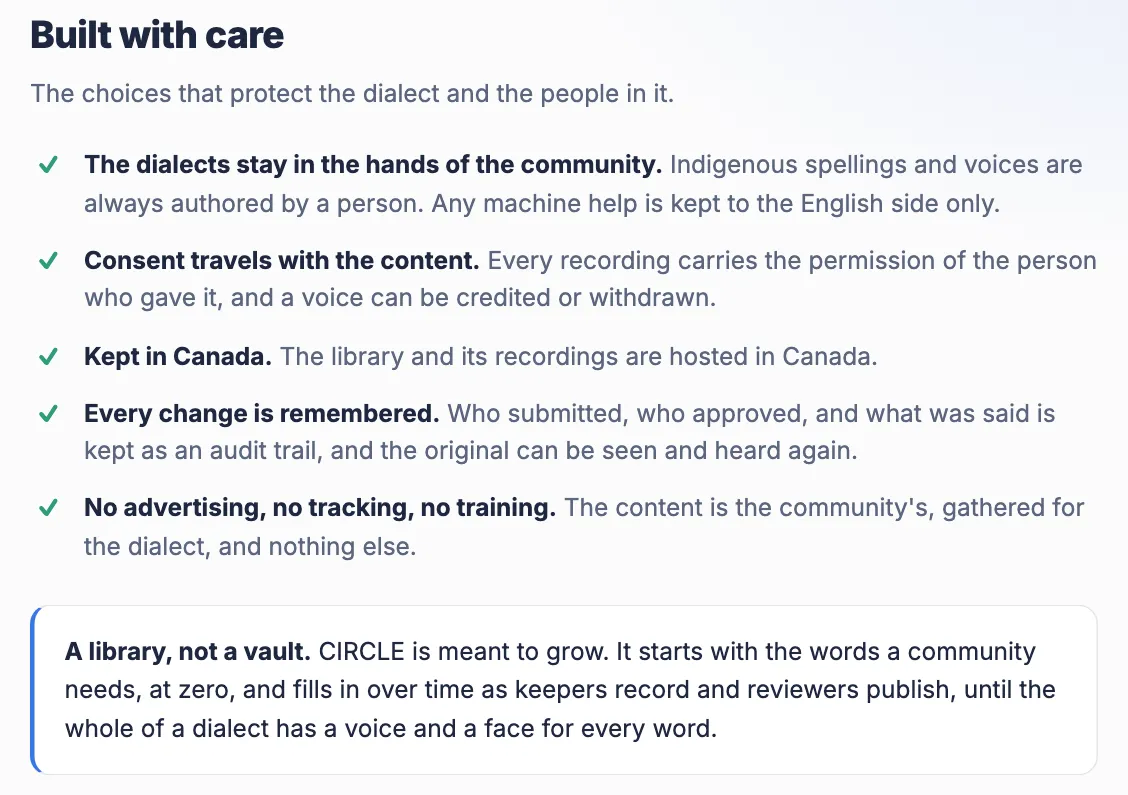
A machine does not put words into an Indigenous language on a platform built to teach it. Every spelling and every voice is a person's decision.
The approach: one record, many doors
I split the platform by job. CIRCLE is the system of record for content: an English anchor word with spellings and voices per dialect and community, a shared review queue, and consent that travels with every recording. SPARK is the system of record for classrooms: teachers, classes, plans and progress, reading content from CIRCLE over an open API. The support desk sits beside both, with one sign-in door for teachers and one for collectors. Each site has a staging environment that mirrors production, and nothing reaches production until it has passed there first.
1. Consent is data, not a checkbox
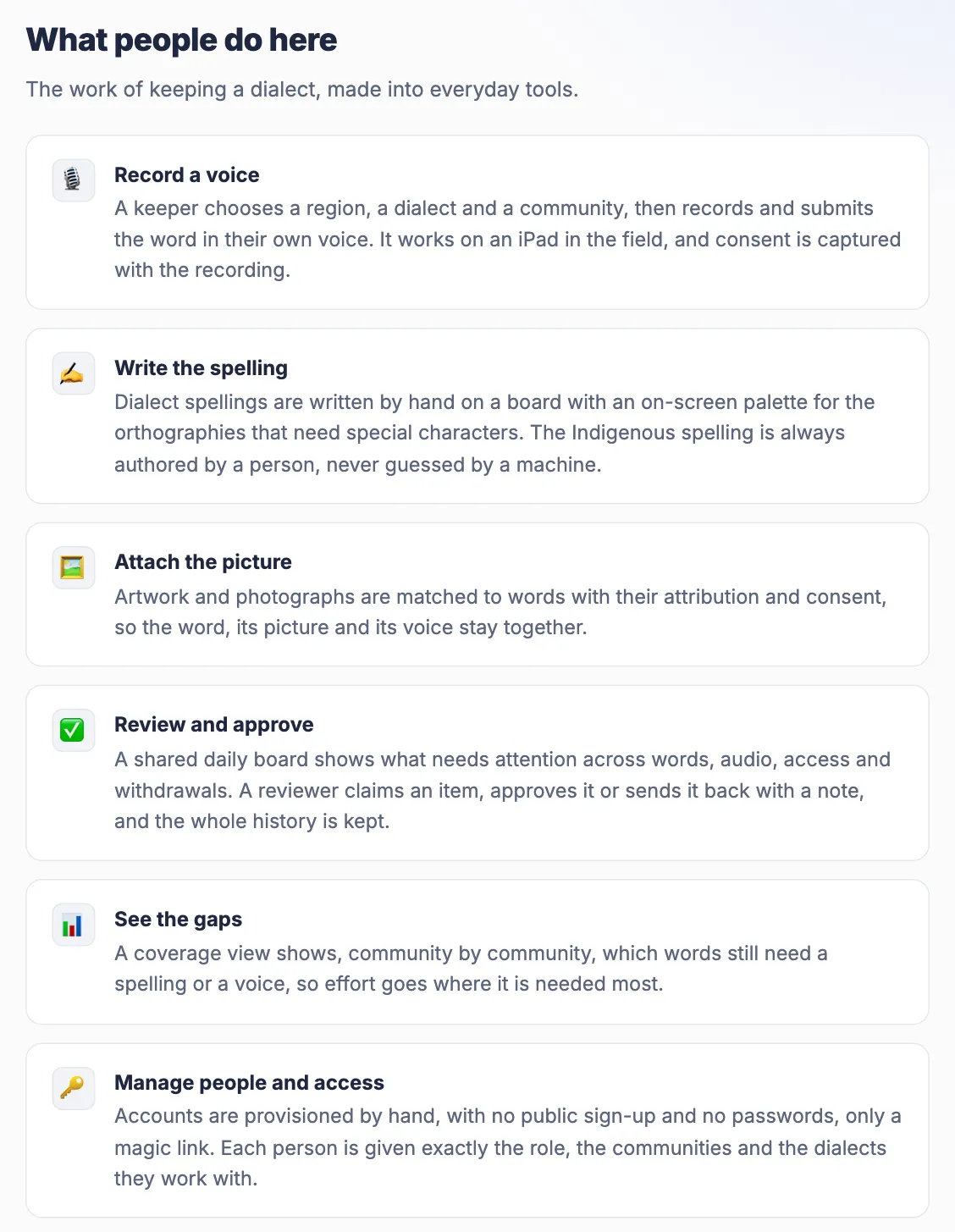
Every recording carries its speaker's agreement, and the games feed only serves audio whose consent is on file. A withdrawal takes effect immediately. Credit stays with the speaker, shown with a generated pattern, never a photo.
2. Built for the field
Collectors record on an installable iPad recorder with batch upload, a waveform trimmer, and a flag for unsure spellings so nobody has to guess. They can record on behalf of Elders and speakers who never use the app.
3. Classrooms without child accounts
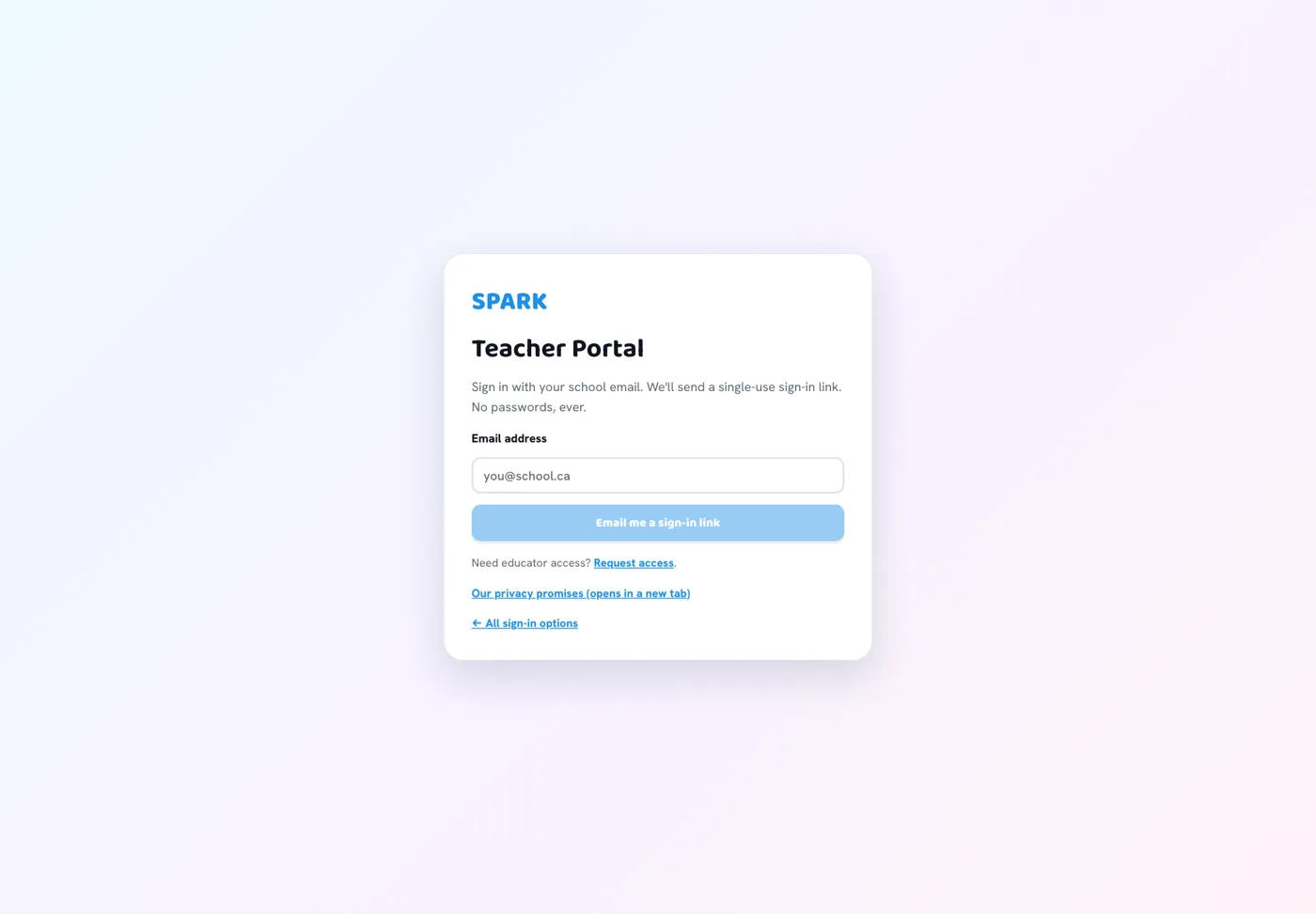
Kids sign in with a printed QR card and a short code, only during class hours, with no names, emails or tracking. Teachers set up classes, plans and printable cards themselves, and the open games stay free for anyone.
4. Safe to hand over
Least-privilege infrastructure, a web application firewall, image metadata stripping on every upload, a content-notice and takedown process, and smoke tests that gate every deploy. Then current-state runbooks and docs, so NCS can run it without us.
Working with the community
Dialect keyboards and fonts were built from the official GNWT alphabet sources and checked against the real word collection. The NCS language and design lead shaped the library's design and the games, and field feedback from collectors drove releases week to week. The platform's job was to keep decisions in community hands: spellings, voices and what gets shared are always authored and approved by people.
Results
- 3 production sites live (CIRCLE, SPARK and the support desk, launched September 2026)
- 8 dialects across 30 communities (served by CIRCLE to the SPARK games)
- 1,000+ automated tests (about 700 on CIRCLE and over 300 on the SPARK server, gating every deploy)
CIRCLE, SPARK and the support desk live in production since September 2026, hosted in Canada.
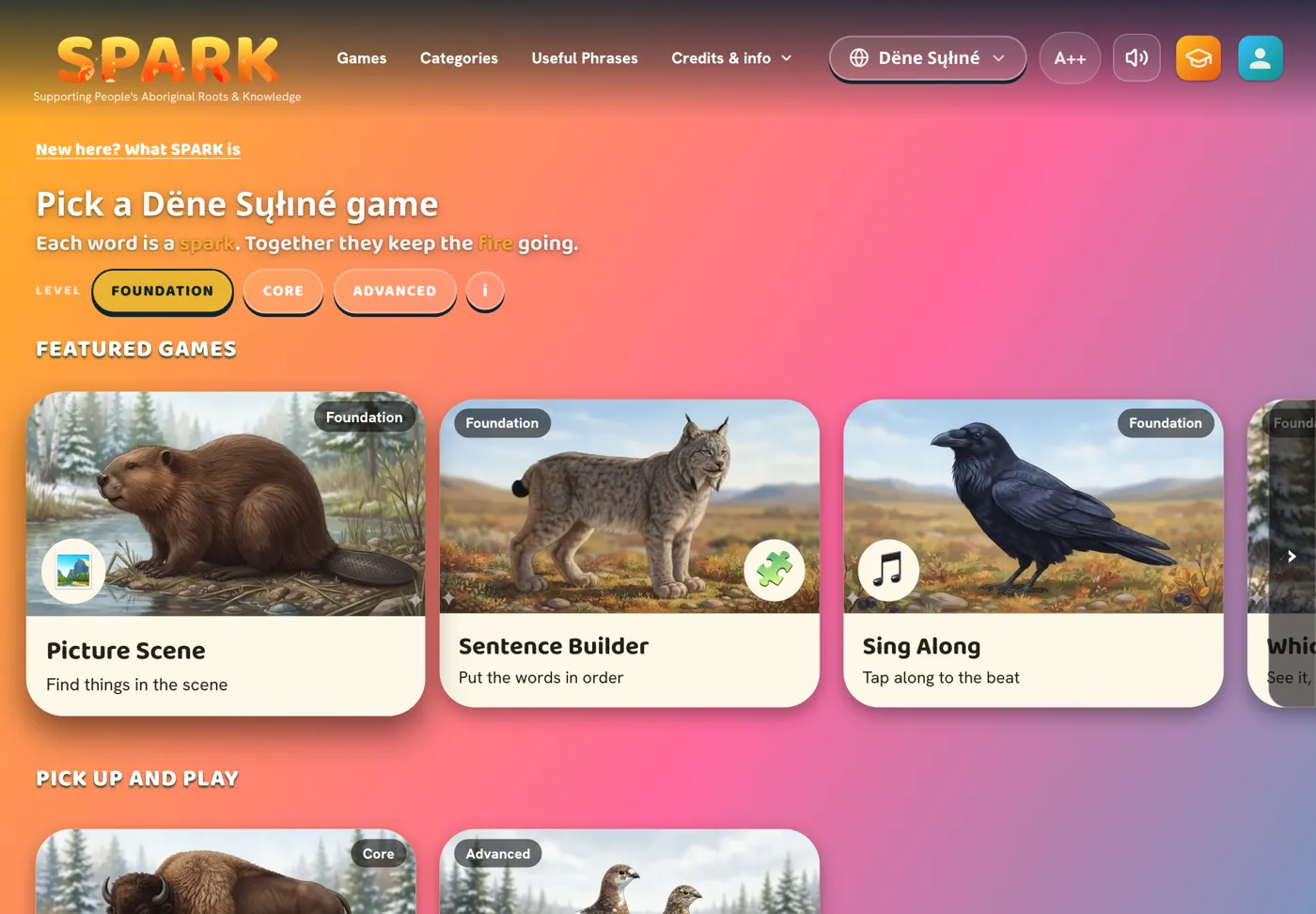
SPARK replaced the legacy game with 10 game modes, a Teacher Portal and child-safe sign-in.
Legacy infrastructure decommissioned, and the platform handed over with runbooks in November 2026.
Inside the platform
Reflection
I am proudest that the platform puts its strongest rules around people rather than technology: consent travels with every voice, children never need an account, and no machine writes a word of the language. And that it went from pitch to three live sites in a season, then into NCS's hands with the docs to run it.