Business Strategy
Cloud, or Your Own?
Renting a frontier model from a big provider is the fast, obvious path, and most of the time it is the right one. But some work should never lea…

There is a question I get from almost everyone once they move past "should I use AI at all." It is the next honest question, and it is a good one. Do I rent this from one of the big providers, or do I run my own?
I want to answer it the way I would if we were sitting across a coffee, not a sales table. Because the real answer is not loud, and it is not one-size. Most of the time, renting is right. Sometimes it is exactly the wrong call. The skill is telling which situation you are in before you spend anything.
What "the cloud" actually gives you
When you use a model from one of the major providers, you are renting the best-trained, best-maintained intelligence available, by the request. You do not buy hardware. You do not hire people to keep it running. You get the newest capability the day it ships. For most businesses, most of the time, this is not just the easy path. It is the smart one. Fighting it would be like generating your own electricity because you do not fully trust the grid.
So let me be clear up front. If you are starting out, if your use is general, if your data is not especially sensitive, rent. Do not overthink it. The cloud is a genuinely good deal, and building your own to avoid it is usually a solution in search of a problem.
Where renting stops being the obvious answer
There are three places where I start to lean the other way, and they have nothing to do with being clever and everything to do with being responsible.
One, the data cannot leave. Some information should never cross your property line. A law office's client files. A clinic's patient records. A founder's unreleased strategy. When you send text to someone else's service, you are trusting their terms, their retention, their security, and their jurisdiction. For a lot of work that trust is fine. For some work it is a line you do not cross, no matter how good the model is.
Two, you cannot afford the behavior to shift under you. I have written before about this. When you rent, the ground can move. The serving path changes, the model behaves a little differently, and the first you hear of it is a client complaint. Running your own version, pinned and frozen, means it does exactly what it did yesterday until you decide otherwise. For a product your business depends on, that stillness has real value.
Three, the math changes at scale. Renting is cheap until it is not. At low and medium volume, paying by the request is a bargain. But there is a crossover point where steady, heavy, predictable use makes owning the cheaper line over time. The trick is that you usually cross it quietly, one invoice at a time, without noticing.
The honest middle: on-demand, not always-on
Here is the part most of the loud advice skips, and it is the part I find most useful.
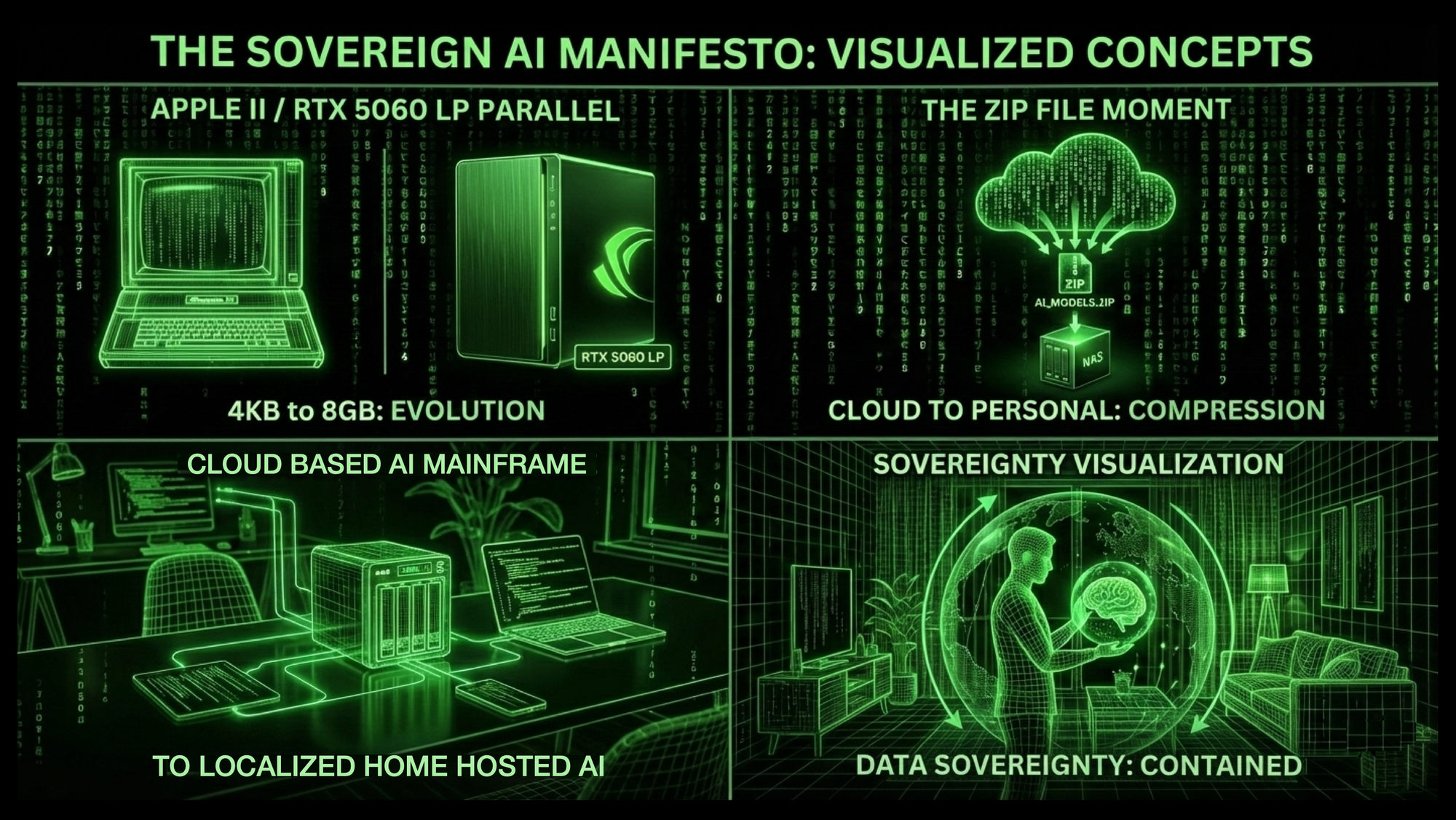
It is not actually rent versus own. You can own a capable model and only turn it on when you need it. Spin it up for the afternoon you need it, do the sensitive work on hardware you control, then spin it down. You are not paying to keep a machine humming all year for a job you do once a week. And you are not handing your most private material to someone else's service either.
That is the model I keep coming back to for the careful cases. Your own tuned tool, on infrastructure you control, running only when there is work for it. It gives you the privacy and the stillness of owning, without the cost of always-on. It is the quiet answer that sits between the two loud ones.
How I actually decide
When someone asks me which way to go, I do not start with the technology. I start with three plain questions, and they are almost the same ones I ask about adopting AI at all.
- Can this data leave the building? If no, that settles most of it. Own it, or run it on something you control.
- Does the behavior need to hold perfectly still? If a quiet change would hurt a client or a case, pin your own version. If a little drift is harmless, rent.
- Is the use heavy, steady, and predictable, or light and occasional? Heavy and steady leans toward owning. Light and occasional leans toward renting, or toward turning your own tool on only when you need it.
Notice what is not on that list. Nothing about which provider is winning this month. Nothing about being an early adopter. Just: where does the data have to stay, how still does the behavior need to be, and how much are you really going to use it.
The point is fit, not fear
I am not telling you to build your own anything. For most people reading this, the cloud is the right call, and I would say so to your face. But if you are holding information that cannot leave, or running something your business cannot afford to have shift under it, there is a calmer, more sovereign option than renting the biggest model and hoping. You can own a smaller, sharper tool that does your job, and run it only when the work is in front of you.
Measure twice here too. The question is never "cloud or own" in the abstract. It is "what does this particular job actually need." Answer that honestly, and the right path is usually obvious, and usually quieter than the advice you are being sold.